
https://youtube.com/live/Tiiy2r1LkAo?si=B1xqMFNpG3s2-enZ

Cessationist Arguments Against vs Strongest Arguments For the Gifts of The Holy Spirit in operation today with Special Guest Dr Sam Storms


Scrabo Forum: AI – Sunday 14th April – David Glass

By Faith
Hebrews 11:1-40 ESV
[1] Now faith is the assurance of things hoped for, the conviction of things not seen. [2] For by it the people of old received their commendation. [3] By faith we understand that the universe was created by the word of God, so that what is seen was not made out of things that are visible. [4] By faith Abel offered to God a more acceptable sacrifice than Cain, through which he was commended as righteous, God commending him by accepting his gifts. And through his faith, though he died, he still speaks. [5] By faith Enoch was taken up so that he should not see death, and he was not found, because God had taken him. Now before he was taken he was commended as having pleased God. [6] And without faith it is impossible to please him, for whoever would draw near to God must believe that he exists and that he rewards those who seek him. [7] By faith Noah, being warned by God concerning events as yet unseen, in reverent fear constructed an ark for the saving of his household. By this he condemned the world and became an heir of the righteousness that comes by faith. [8] By faith Abraham obeyed when he was called to go out to a place that he was to receive as an inheritance. And he went out, not knowing where he was going. [9] By faith he went to live in the land of promise, as in a foreign land, living in tents with Isaac and Jacob, heirs with him of the same promise. [10] For he was looking forward to the city that has foundations, whose designer and builder is God. [11] By faith Sarah herself received power to conceive, even when she was past the age, since she considered him faithful who had promised. [12] Therefore from one man, and him as good as dead, were born descendants as many as the stars of heaven and as many as the innumerable grains of sand by the seashore. [13] These all died in faith, not having received the things promised, but having seen them and greeted them from afar, and having acknowledged that they were strangers and exiles on the earth. [14] For people who speak thus make it clear that they are seeking a homeland. [15] If they had been thinking of that land from which they had gone out, they would have had opportunity to return. [16] But as it is, they desire a better country, that is, a heavenly one. Therefore God is not ashamed to be called their God, for he has prepared for them a city. [17] By faith Abraham, when he was tested, offered up Isaac, and he who had received the promises was in the act of offering up his only son, [18] of whom it was said, “Through Isaac shall your offspring be named.” [19] He considered that God was able even to raise him from the dead, from which, figuratively speaking, he did receive him back. [20] By faith Isaac invoked future blessings on Jacob and Esau. [21] By faith Jacob, when dying, blessed each of the sons of Joseph, bowing in worship over the head of his staff. [22] By faith Joseph, at the end of his life, made mention of the exodus of the Israelites and gave directions concerning his bones. [23] By faith Moses, when he was born, was hidden for three months by his parents, because they saw that the child was beautiful, and they were not afraid of the king’s edict. [24] By faith Moses, when he was grown up, refused to be called the son of Pharaoh’s daughter, [25] choosing rather to be mistreated with the people of God than to enjoy the fleeting pleasures of sin. [26] He considered the reproach of Christ greater wealth than the treasures of Egypt, for he was looking to the reward. [27] By faith he left Egypt, not being afraid of the anger of the king, for he endured as seeing him who is invisible. [28] By faith he kept the Passover and sprinkled the blood, so that the Destroyer of the firstborn might not touch them. [29] By faith the people crossed the Red Sea as on dry land, but the Egyptians, when they attempted to do the same, were drowned. [30] By faith the walls of Jericho fell down after they had been encircled for seven days. [31] By faith Rahab the prostitute did not perish with those who were disobedient, because she had given a friendly welcome to the spies. [32] And what more shall I say? For time would fail me to tell of Gideon, Barak, Samson, Jephthah, of David and Samuel and the prophets— [33] who through faith conquered kingdoms, enforced justice, obtained promises, stopped the mouths of lions, [34] quenched the power of fire, escaped the edge of the sword, were made strong out of weakness, became mighty in war, put foreign armies to flight. [35] Women received back their dead by resurrection. Some were tortured, refusing to accept release, so that they might rise again to a better life. [36] Others suffered mocking and flogging, and even chains and imprisonment. [37] They were stoned, they were sawn in two, they were killed with the sword. They went about in skins of sheep and goats, destitute, afflicted, mistreated— [38] of whom the world was not worthy—wandering about in deserts and mountains, and in dens and caves of the earth. [39] And all these, though commended through their faith, did not receive what was promised, [40] since God had provided something better for us, that apart from us they should not be made perfect.
https://bible.com/bible/59/heb.11.1-40.ESV
Share this:

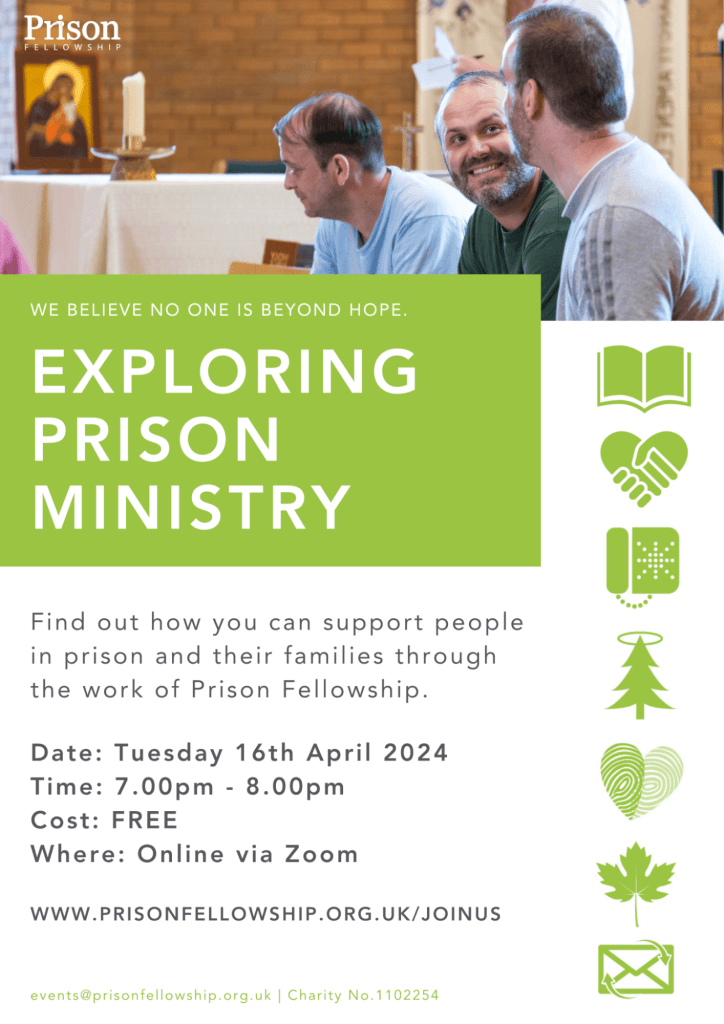
Prison Fellowship
Share this:

Naked Bible – The Lord’s Supper (Dr. Michael Heiser)

Share this:

The Gospel of Mark Series with Mike Winger

Share this:

Don Francisco – He’s Alive (Live)
Share this:

Will This Make You Believe in Jesus? The Isaiah 53 Prophecy.

Share this:

The Death of Jesus
The physical suffering of Jesus endured cannot be compared to His spiritual sufferings. However, a consideration of the terror of death by crucifixion will give us a greater appreciation of what He endured for us.
Many hundreds of years before crucifixion was even invented; David in Psalm 22 predicts the Messiah’s death; the details given exactly match Jesus Christ’s death by crucifixion. The Psalm begins with a cry of agony: “My God, my God, why hast Thou forsaken me? Why art Thou so far from helping me and from the words of my roaring?” These are the very words Jesus spoke on the cross. ‘Roaring’ indicates a loud cry of great pain. Crucifixion provides one of the most painful deaths imaginable. It was designed to be the ultimate humiliation.
The Psalm goes on to describe the onlookers who mock and ridicule the victim. “All that see me laugh me to scorn, they shoot out the lip, they shake the head saying ‘He trusted on the Lord that He would deliver him, let Him deliver him, seeing he delights in Him.’” (v 7, 8).
The Psalm then reveals his weakened state: “I am poured out like water.” (Verse 14).
Before being crucified he received a scourging from the Romans. He was stripped and tied to a post. A crown of large thorns was pressed into his skull. He was struck with a rod on his face (see Micah 5:1). He was also struck again and again by the soldiers. They used a whip with multiple leather thongs, jagged bones and lead beads designed to penetrate the skin and muscle causing deep contusions and bruising. Traditionally there were thirty-nine lashes but we know that Jesus’ beating was particularly brutal. So severe was this that Peter (1Peter 2:24) says: “By his stripes we were healed.” The word translated ‘stripes’ is singular in the original language. Thus it could better read: “By His bruise we were healed.” His back became a massive bruise with much loss of blood. Often such a scouring resulted in death (see also Isaiah 53:5; 50:6; Micah 5:1).
Then He was required to carry his cross (the horizontal part) which weighted one hundred pounds through Jerusalem. This involved great public humiliation. Jesus said that his followers would sometimes have to carry their cross. This means that Christians sometimes share his humiliation and persecution because of their allegiance to Jesus Christ, since his knees had been so weakened another had to help him carry it.
Then his hands were nailed to the cross-piece with him lying on the ground. Large, six inch, dull nails would be driven into his wrists. The nail would go through a nerve and tendons causing excruciating pain. He would then be lifted up by ropes onto the vertical post standing in the ground. He was placed in a half-knee bend position so that the feet could be nailed flat against the cross. A nail was driven through both feet again crushing nerves.The Psalmist predicts:“They pierced my hands and my feet.” (v 16). (also Isaiah 53:5; Zechariah 12:10)
In this position it is impossible to support your weight for long with your legs (especially in his weakened state). Therefore he mostly had to suspend himself by his arms. At first the arms were nearly horizontal, and so when he was lifted up into the vertical position a massive load was put upon the arms (like a terrible torture rack). This force would be many times a man’s weight. This would have dislocated his arms at his elbow and shoulder. His arms would have lengthened by six inches allowing him to sink down. In the final position his arms would have been about thirty degrees to the horizontal, making the load on his arms more bearable (about two hundred pounds, the weight of a man).
This dislocation was predicted in the Psalm: “All my bones are out of joint.” (Verse 14). The extension of his body during crucifixion would tend to make the bones more prominent than usual. “I can count all my bones. They look and stare upon me.” (Psalm 22:17). Therefore we see that crucifixion stretches the body out so that it is under intense strain and immense pain. The word ‘excruciating’ means ‘out of the cross’. It describes the pain suffered by on crucified. It was extreme public torture developed by the Romans for maximum deterrance.
Another consequence of crucifixion and the loss of blood is that the man become very thirsty (dehydrated). Thus Jesus said: “I am thirsty” (John 19:28). In the Psalm it says: “My strength is dried up like a clay pot (dehydrated), and my tongue cleaveth to my jaw, you have brought me into the dust of death.” (Psalm 22:15). Also: “In my thirst they gave me vinegar to drink.” (Ps 69:21). As prophesied here they offered Jesus a drink (Matt 27:34; John 19:28, 29)
Crucifixion often meant death by suffocation. Hanging with the arms outstretched put the chest in a permanent inhale position. To catch a breath he must push up on his feet, causing an excruciating knowing pain on his feet as the nail tears the flesh and locks up against the bones in the foot. Then he must return to the hanging position. As the person weakens he is unable to make this effort and dies of suffocation. However, this could go on for days.
Nevertheless there is good reason to believe that Jesus did not die of suffocation.
Matthew 27:50 says:“Jesus when he had cried again with a loud voice, yielded up the ghost.”A man about to suffocate does not shout the moment before. He still had strength left.
Another clue is given in Psalm 22:14:
Psalm 69 describes this event says: “Thy reproach hath broken my heart, I am full of heaviness.” (Verse 20). The New Testament writers quote this Psalm as being fulfilled by Christ’s death on the cross. This implies that his heart may have actually burst or ruptured because of the massive emotional and spiritual stress and suffering he endured through bearing our sin and curse along with the fullness of God’s infinite wrath and punishment for our sins. This enormous stress was also evidenced earlier in the Garden of Gethsemane when he sweated drops of blood. This rare condition is always the result of extreme emotional stress.
One consequence of having this broken heart is the build up of water around the heart and lungs. This was manifested when later one of the Roman soldiers pierced his side to ensure he was dead -fulfilling the prophecy: “They shall look upon him whom they pierced” (Zechariah 12:10).
When he pierced him “immediately there came out blood and water” (John 19:34) confirming his broken heart. Therefore our Lord’s heart was literally broken for us when he died.
Often the soldiers would break the legs of the crucified. This would speed up their death because they would no longer be able to lift themselves up to exhale and thus suffocation would quickly follow. However when they came to do this to Jesus he had already died and so they did not break his bones, to fulfil the scripture: “He keeps all his bones, not one of them is broken” (Psalm 34:20; Numbers 9:12). Since Jesus was to fulfil the role of Passover Lamb this was necessary (Exodus 12:46, 1Corinthians 5:7).
In conclusion we see that crucifixion produces a very slow and painful death. The prophets described the future sufferings of the Messiah in great detail. The whole description applies to death by crucifixion only, since it is quite a unique way to die. Psalm 22 in particular describes in great detail the events of Jesus’ crucifixion. The amazing fact is that it was written hundreds of years before crucifixion was even invented.
In Lamentations 1:12 (in 586 BC), Jeremiah spoke these words describing the supreme sufferings of Christ. By the spirt of prophecy, from the very same place Christ would be crucified 600 years later, he was uttering the very words that Jesus said to the passers-by as He hung on the Cross right next to the public road north of the Damascus Gate: “It is nothing to you, all ye that pass by? Behold and see if there be any sorrow like unto my sorrow, which is done unto me, where with the Lord has afflicted me in the day of his fierce anger.”
“My heart is like wax, it is melted within me.”
Jesus had to endure this experience, to open the gates of Heaven, so that you can have free access to God.
So that your sins could be “washed” away. All of them, with no exception! Don’t ignore this situation.
JESUS CHRIST DIED FOR YOU!
He died for you!

 Ards & North Down Christian Community Hub
You must be logged in to post a comment.